The Uncanniness of Spiritual Abuse
Roots and Truth
Links to Resources at the Bottom of this Page
I sat down to write this post about spirituality this morning. As I was writing, my son Weston (who is 10) ran upstairs during a school break. (He does an online school program.)
“Mom! You want to go on a walk outside!?! It’s Snowing!!“
It has been an unusually warm winter, here, where we live in Utah. It’s mid-Febuary, and today the snow started falling and sticking to the ground.
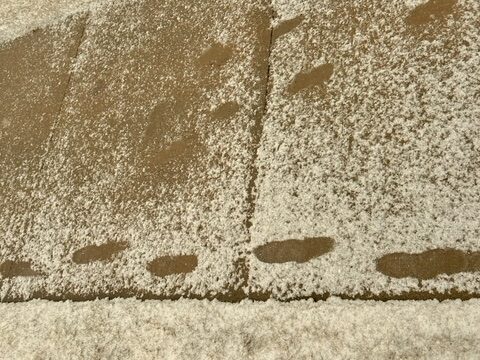
As we were walking on the long sidewalk path behind our home, he instinctively started walking in the prints that I had left behind.
He was walking my path.
Instinctively walking in my footsteps.
And I knew that this was were I needed to start writing. I needed to name and normalize–no matter our upbringing. We all have been affected by our parent’s paths. If you grew up in a home where prayer or ritual was normalized, this is part of your story.
If you grew up in a home where the TV screen was a day time, evening and meal-time ritual, this is also something that you need to notice in your upbringing.
If you grew up feral, but with the land. Again, this is part of your story.
I’m thinking about those of you, who grew up in the city, being shuttled from home to daycare daily. What were your weekends like? Did your parents connect with you? Did they find time to go on meaningful vacations or take you to church on Sunday morning?
The ways in which we formed a connection with heaven or earth is available to us, within our memories.
The intention of this blog post is to help you understand our spiritual development. To help you remember the steps that were placed in front of you when you were young.
It is important to know that we each initially followed a care-giver down their path for a period of time. It is also important to normalize that to question their path is a part of our personal growth and understanding. Question if the path they chose (or passively chose), is still the same one that you want to follow.
In this post I will suggest a definition around SPIRITUALITY. I will share how I discovered the phrase “Spiritual Abuse” during a period of time that illness and pain invaded my body. I explore ideas of hierarchy, bringing awareness to the BIG and the small. And how this hierarchy leads to disconnection in relationships and from our bodies. At the end, a few suggestions for a healing path are listed. As well as links to continue your education. There is also a link if you are seeking professional help.

What is Spirituality?
Spirituality encapsulates a few core themes, the first being connection.
Connection with a higher power, a purpose, other people, or nature.
This connection to that power, or nature, or one another should then be “grounded in love and compassion“. 1
The second theme of spirituality that is being presented, is love and compassion.
The love that we have for others can create meaning as we sit with them through celebration or discouraging days. Compassion is displayed if we have the tolerance to be with another through the ups and the downs. A sense of love can grown with an animal, or a pet. Love can manifest its self in the ways we show respect for the earth as we compassionately spend time it and enjoy it.
And lastly, an understanding how to access a state of Presence or pure consciousness
will always enhance a spiritual practice.
(Living consciously is to be present in the here and now, and within our own body.) 2
If you are having a hard time understanding what presence is, I created a quick exercise that you can do on this blog post: fjdksla;fj
A spiritual practice should include connection, love, compassion, a connectedness to the present, and to our body. When we are present within our bodies, this power of creation or the ability to collaborate is enhanced.

The Path of My Discovering Spiritual Abuse
As I reflect on childhood memories, I can recognize that I was deeply connected to religion. My upbringing in church was foundational. It gave me initial ideas, and specific vocabulary. I was given vocabulary around a higher power that I should resource and look to. He was a source of all that is good. Titles like “Father in Heaven” or “God” were added to my vocabulary. But this unknown heavenly-source seems to live in beauty–up in the clouds and He couldn’t carry me or hug me in a physical form like my earthy father could.
Children naturally live in the present. And the present needs a meal and someone to put them to bed at night. This is a simplification, but a quick explanation why I instinctively put my trust in my earthy father, my Dad.
He was the source of shelter and paid for the food that I ate. He gave me shoulder rides and rubbed my back and sang me a song at bed time. I was given vocabulary to pray and learn trust in God, but in real-time, I put my trust in my Dad.
There’s a odd comparison to a perfect being, a “Father in Heaven”, that lives in the cloud, and cannot be removed. And then as a child being asked to put full trust in an imperfect human. Someone that I could see with my eyes and hear his words.
Conversely to communicate with the man upstairs, (God), I was supposed to use the holy sprit within me. I was taught that “His Spirit” was connected to my earthy body. I mention this, because I see, and I feel the contradiction within this teaching.
Think about that again. I was asked to trust in something that I couldn’t see. But still communicate with Him through the spirit or soul inside my body.
As I think about it now, I question, why was God has been taught as a removed being? And why these stories, like the ones that I learned in Sunday School taught to create this illusion?
Here’s the Thing
It is hard to divide the two in the psychological mind. The two meaning:
- An all perfect-loving God, that feels removed, but a part of him lives within (spirit or soul)
- A human caretaker who often has forgotten what loves feel like because they are working so hard to take care of all of the physical needs.
There’s an uncanny nature to all of this. The uncanny is the psychological experience of an event or thing that is unsettling in a way that feels oddly familiar, rather than simply mysterious. 3
The way that I understand spirituality now, is a beautiful merger that happened within my body and the Devine. Instead of being separate, we are the same. I succeed in resourcing the connection in both my body and it’s signals inside of me. This connection feels like a spiritual practice to me.
There’s not some mystery in the clouds–rather, the beauty and majesty lives inside and the body and it’s wise knowing, work in harmony.
The power struggle that religion often introduces is that there is a BIG “Father” in charge. The leaders want an individual to outsource learning, and look to someone ABOVE. This, in a very odd sense, happens in the home as well. A child is meant to be led by and obey a BIG mom or dad.
In doing so a child is often removed from connection–away from what their body knows, to follow a parent’s lead. In the case of religion, they are taught to learn from a leader’s guidance, or looks to outsource knowledge from an all knowing God, instead of trusting internal wisdom.
The Disconnect
The hierarchy creates this illusion of the BIG and the small. These systems are designed to keep the BIG in control.
Think of that narrative, that “God is above you”.
Placement with someone above, and someone below keeps power systems alive and in control.
There are countless ways that the underdog is motivated to live in this narrative.
Often we follow the lead from our parents to follow this narrative.
Physical control can be a coorersive incentive.
Removing trust from the body is an odd twist in this narrative.
I was chronically ill for six or seven years before I started to remember the stories of how I was committed to dress in a certain way to gain approval and trust from my parents and religious community.
This is one of my earliest clear memories, so I wrote about how I felt in my body. I wrote about it in this blog post:
The feelings of being removed from my body led me to investigate my story more thoroughly. I hired a trained Story Work Coach, and in our first meeting I started reading this story around modesty conditioning.
As I did, I listened to the signals that my body gave as I was reading it.
My body responded with tears in my eyes. Or pain in my chest around my heart. There was a certain pressure that I felt in my shoulders as I read about the incentive to stay under the suggested control.
If reading about spiritual abuse scares you, know that I’ve been there!! But what I would urge you to do, is gently continue reading to increase your knowledge and vocabulary around this very subject.
The number one indicator to know if this information is affecting you, is to listen to your body.
This really is one of the biggest tell tell signs that there is a spiritual a disconnection with you body. If you start to recognize internal sensations or symptoms, notice them. They have meaning.
Defining Spiritual Abuse
Spiritual abuse can be described as a “lasting impact of experiences in religious or spiritual contexts that can lead to feelings of betrayal, shame, and disconnection from one’s authentic self.” 4
Spiritual abuse occurs within a structure or system, where an individual is exposed to, or experiences physical or emotional harm. This could have been inside a religious facility, in the home, during an organized activity, or even in conversations where the individual’s point of view was overlooked, or punished while questioning authority. 5
Individuals that are taught fear and shame, in the context of holding them accountable to the group’s rules or mandates, may be living with after effects of spiritual abuse. Children are susceptible to spiritual abuse. This can occur when they are put in a position to participate in non-age appropriate acts. Side effects from these events create distancing from how they feel in connection to their body. Later in life this distancing from the body may show up as: shaking in the body, chronic health conditions, feeling hopeless or unworthy. 6
Let’s explore a few different paths that a body might take, as a result of spiritual abuse.
The Path of Labeling Unresolved Emotions
- Unexpressed emotions surface like resentment, anger or anxiety may be present
- Emotional numbing behaviors such as substance abuse, self-harm behaviors, avoiding situations that bring about intense emotions, dissociation, depression
- Internalized shame and self-hate internal narrative may start surfacing internally. Thoughts with themes of “I’m not good enough.” “I’m unworthy.” “I’m a bad person.” “No one is ever going to love me.”
- Fear of trusting one’s inner voice or body signals. This can show up as self-sabotage, or not being able to take progressive next steps. 7
Within these controlling systems, self-care is often labeled as selfish, perpetuating the disconnection from one’s own needs, boundaries, and intuition.
The Path That Feels Isolating
Spiritual abuse often thrives in isolation. Members may be cut off from:
- Outside professionals (like therapists, doctors, or lawyers)
- Mainstream media or news
- Friends or family not involved in the group
In some cases, this is literal—communes, neighborhood “buyouts,” or closed compounds. But more often, it’s psychological isolation. Members are told the outside world is evil, untrustworthy, or dangerous.
This experience of isolation can be a subcategory of shame. The feelings of shame and fear that arise can make it incredibly difficult to leave—even when the group is harming them. When individuals stay, many people describe this feeling as, intensely alone, scared, or “different” from the rest of the system. 8
Guidlines
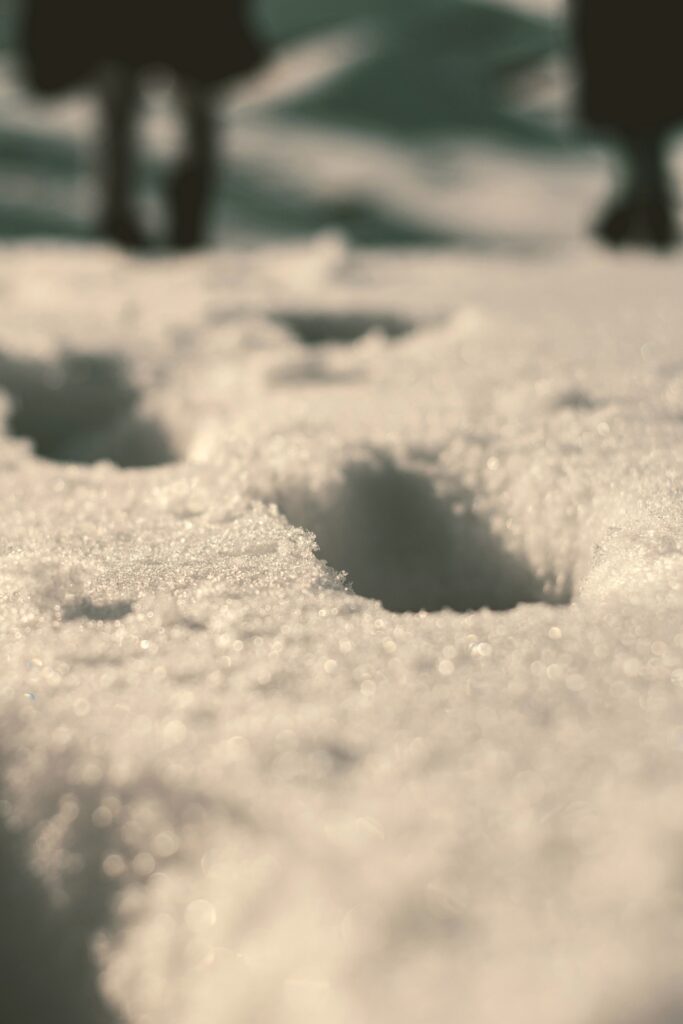
Returning to the visual analogy that I began with, by adult-hood many of us have old worn prints, that feel like they are pressed very deep within the snow.
If you have been led to question or divert from a previous path that was presented to you, may I suggest a few guidelines to understand during the deconstruction and reorientation process.
First,
Hillary McBride, in her book Holy Hurt, makes it clear that the path of healing does not mean we leave the religion. And it does not mean that we should continue to stay in a religion.
An additional
thought that I heard from Sarah Baldwin titled, How Trauma Can Keep Us From Embodied Spirituality, Sarah states that some will need to leave the religion for some time, similarly to a divorce. After a reconciliation process, some end up going back– some don’t.
Lastly,
I would like to encourage anyone on a spiritual healing path to start to label the feelings they are having while participating in, or attending religious events or ritualistic ceremonies.
Feelings to Label
When we feel the wounds that make us feel small, helpless, weak and needing saved the feelings of shame often show up in our body. This may show up in our behaviors. We may avoid certain situations. Notice if it is hard to make eye contact with another person during interactions.
Shame hold us back from authentic connection. Shame is an indicator that we have work to do, and most likely need to seek help or enter a support group to start to explore your internal stories of where you hold shame.
Anger is another feeling that will show up in the deconstruction process. Anger toward God, or a leader, or towards the system’s way of operating is natural. Anger is part of a step of the grieving process. Anger often leads us into grief, and grief is essential during this reconciliation journey.
It feels really scary to challenge previously held beliefs. Fear is another common feeling that comes up in the body. If you are afraid, feel it. Name it. Label how it feels inside of your body. It is normal to feel really scared if you have been the one sitting in the top seat of systematic power and control.
Feeling caught in this bind, inbetween the BIG and the Small is explain so well by therapist Terry Real. If you need a new way of labeling feeling, I would encourage you to look into his work, at Terryreal.com 9 This visual that he has created allowed me to explain the impact of my hurt a little more clearly.
Returning to Your Story
If you are feeling harmed from some beliefs that were taught to you in childhood, do you believe that it is a normal part of your adult development to question those beliefs?
Do you believe that there will be a resolution available through the conflict that you feel?
Do you believe that spirituality feels different then what you learned in systems of that lead with power and control?
A normal response from those who are embarking on this journey is to say,
“I can’t remember specifics very well.”
This is normal to. This is okay. Start to trust your body and understand what sensation it is giving you. Is this sensation linked to a feeling?
I truly belief that a path, that leads to healing, begins with feelings inside of the body.
If you need a guide through this consider hiring someone who is a Trained Somatic Practitioner or Story Work Coach.
This path may feel lonely at times. That is the result of the disconnection that we are feeling, as a result of the harm or abuse.
Healing does not look like ostracizing yourself for an unlimited amount of time.
A spiritual path with include feeling connected and present. The heart expands, as you find open avenues to love. Different creative stones will be placed in from of you.
An authentic process will takes creativity without defined lines. In this experience, no footprints in the snow will lie before you. It is different this time around, and I believe that is one of the reasons why it feels so difficult.
Resources
Youtube Video: Reorienting Yourself After Spiritual Abuse
Story Work Coach Directory: Narrative Focused Trauma Care®
Book Recommendation: Holy Hurt: Understanding Spiritual Trauma and the Process of Healing
I would love to hear what your thoughts are after reading. Lots of Love being sent to you through your discovery process!!
- Brown, Berne, The Gifts of Imperfection, Hazelden, (2010) [↩]
- Eckhart Tolle, The Power of Now, New World Library 1999[↩]
- Royle, Nicholas, The Uncanny: An Introduction, Routledge 2003[↩]
- McBride, H. (2025). Holy Hurt: A Theological and Psychological Exploration of Spiritual Trauma[↩]
- This form of abuse often shows up in spiritual bypassing—a way of using religious language to dismiss or avoid emotional truth…
…statements [that] may sound comforting on the surface…can also be used to shut down valid emotions or deny harm. When someone is told they’re “straying” for questioning doctrine or “not faithful enough” if prayers go unanswered, it invalidates their experience and adds shame to their pain. Milhoan, Shelby LCPC: https://growwithshelby.com/signs-of-spiritual-abuse-part-ii/[↩]
- https://www.norumpsychservices.com/resources/what-is-religious-and-spiritual-trauma#:~:text=Understanding%20Spiritual%20Trauma&text=Dr.,disconnection%20from%20one’s%20authentic%20self.[↩]
- Milhoan, Shelby LCPC: https://growwithshelby.com/signs-of-spiritual-abuse-part-i/#:~:text=Suppressed%20emotions%20and%20emotional%20numbing,but%20healing%20is%20absolutely%20possible.
- experience and adds shame to their pain. Milhoan, Shelby LCPC: https://growwithshelby.com/signs-of-spiritual-abuse-part-ii/[↩]
- Milhoan, Shelby LCPC: https://growwithshelby.com/signs-of-spiritual-abuse-part-i/#:~:text=Suppressed%20emotions%20and%20emotional%20numbing,but%20healing%20is%20absolutely%20possible.
experience and adds shame to their pain. Milhoan, Shelby LCPC: https://growwithshelby.com/signs-of-spiritual-abuse-part-ii/[↩]
- I first heard this model in the podcast Breaking the Cycle of Shame, Anger and Depression, with Peter Attia.[↩]